When I first planned a trip to Cusco, I discovered that the real challenge wasn’t mapping out the city itinerary, but rather figuring out the logistics of flying to this Andean mountain city.
Cusco is not a major metropolis served directly by international flights.
For most overseas travelers, reaching Cusco usually requires first arriving in Lima, Peru’s capital, and then taking a domestic flight to Cusco.
Consequently, I spent a significant amount of time researching flight routes, layover times, airline options, and post-arrival acclimatization.
Unlike traveling to typical tourist destinations, the flight experience to Cusco is an integral part of the journey itself.
Flying from the coastal city of Lima to the high-altitude Andes—a journey of just over an hour—took me through a dramatic shift in landscapes.
As the plane approached Cusco, rolling mountain ranges and high-plateau scenery came into view; in that moment, I felt I was truly entering the heart of Peru.
Starting with the International Flight: The First Step to Peru
My journey to Cusco began with an international flight.
Since Cusco lacks a large international airport, most travelers choose to fly into Lima first.
Travelers departing from Asia, Europe, or North America usually face one or more layovers.
When planning my route, I focused on a few key issues:
First, the layover time.
International flights can be affected by weather or delays; a tight connection between Lima and Cusco can easily cause stress.
I therefore preferred to build in plenty of buffer time.
Second, the arrival time.
Cusco sits at a high altitude, so the body needs time to acclimatize upon arrival.
Arriving at night might mean missing out on valuable adjustment time.
Personally, I preferred scheduling my arrival in Cusco for daytime.
This allowed me to gradually acclimate to the environment and take in my first impressions of the mountain city.
Third, luggage arrangements.
Travelers heading to Cusco often carry hiking gear, photography equipment, or a significant amount of travel supplies.
Knowing the airline’s baggage policies in advance helps avoid unexpected fees at the airport.
These seemingly minor details can actually have a significant impact on the overall travel experience.
Connecting in Lima: A Vital Link Between the Coast and the Andes
After arriving in Lima, I embarked on the next leg of my journey to Cusco.
Lima is Peru’s largest city and serves as the primary transit point for the vast majority of travelers heading to Cusco.
The flight from Lima to Cusco is relatively short, usually lasting just over an hour.
Yet, this particular flight left a lasting impression on me.
It bridged two completely different worlds.
At takeoff, the view outside the window was of the Pacific coastline near Lima.
Cityscapes, the ocean, and desert landscapes blended together.
As the plane climbed, the scenery began to shift.
The flat coastline gradually gave way to the majestic Andes Mountains.
I was thrilled the moment I first glimpsed the valleys and highlands outside the window.
It felt as though I was entering another world entirely.
I have always believed that a great trip isn’t just about the experience at the destination; the journey there matters just as much.
And the flight from Lima to Cusco was a truly memorable part of that journey.
Arrival in Cusco: A First Encounter with the Andean Highlands
As the plane touched down at Cusco Airport, the first thing I noticed wasn’t the city itself, but the change in the air.
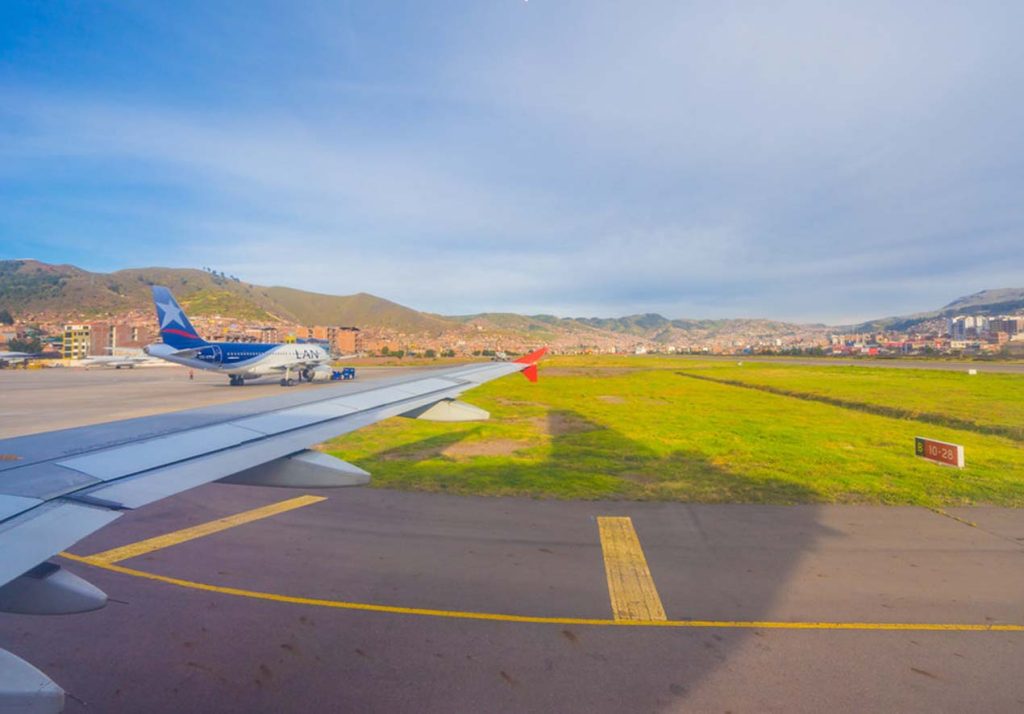
Cusco sits at a high altitude, so the physical impact of the change was immediately noticeable upon arrival.
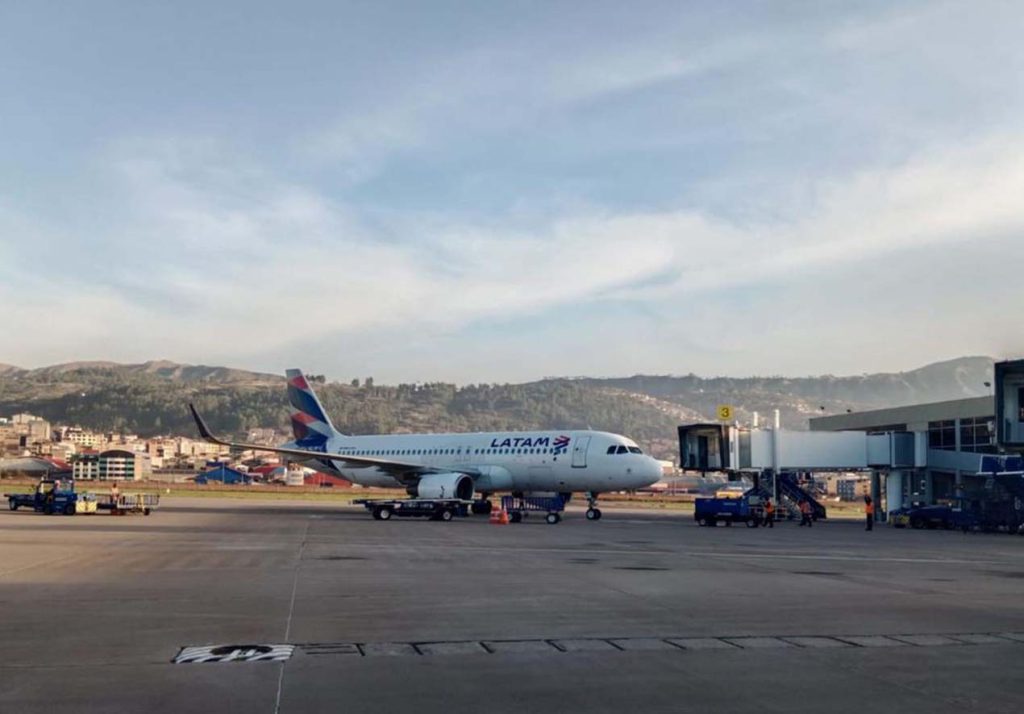
The airport isn’t as massive as those in major international cities, but it possesses a distinct local character.
Stepping out of the airport, I was greeted by a city surrounded by mountains.
The feeling was completely different from arriving in other tourist destinations.
There were no towering skyscrapers or the frenetic pace of a modern metropolis.
Cusco felt more like a historic city tucked away within the Andes.
I didn’t pack my initial schedule with too many activities.
I needed to give my body time to adjust to the long flight and the change in altitude.
In hindsight, that was the right decision.
Many tourists rush to visit numerous attractions right after arriving, but Cusco is a place best explored at a leisurely pace.
Resting and acclimatizing before setting out makes the entire experience much more comfortable.
Choosing an Airline: Balancing Comfort and Scheduling
When planning my flight to Cusco, I realized that the choice of airline was crucial.
Several Peruvian domestic airlines operate flights between Lima and Cusco. I don’t base my choice solely on price.
While low-priced tickets are appealing, time and reliability are just as important for long-distance travel.
I usually consider:
Whether the flight schedule fits my itinerary;
Whether there is a free baggage allowance;
How convenient the airport transfer is;
The flight’s track record regarding delays.
This is especially critical when connecting from an international flight to a domestic one; a delay on the first leg can disrupt subsequent plans.
That’s why I prefer flights with reasonable schedules and a reputation for reliability.
I’ve found that what truly shapes the travel experience isn’t a price difference of a few dozen dollars, but rather how smoothly the entire journey unfolds.
Early vs. Late Flights: My Personal Choice
Choosing the right flight time is also a key factor when flying between Lima and Cusco.
Many travelers opt for early morning flights.
The reason is that the weather is usually more stable in the morning, and arriving in Cusco early leaves the whole day open for activities.
Personally, I recommend this approach as well.
Departing from Lima in the morning allows you to watch the sunlight gradually illuminate the Andes Mountains.
If you have a window seat, the flight becomes a stunning visual experience.
Of course, if your international flight arrives in Lima late, you might choose to wait until the next day for your connecting flight.
Although it means staying an extra night, the overall pace is much more relaxed.
Travel isn’t just about getting there as fast as possible; it’s about finding a rhythm that suits you.
The Window Seat Experience: A Bird’s-Eye View of Peru’s Landscape
If I could offer one piece of advice to travelers heading to Cusco, it would be to choose a window seat.
One of the highlights of this flight is the scenery along the way.
After takeoff, you can see the dramatic shifts in Peru’s landscape unfolding outside the window.
From coastal regions to mountain ranges, and from cities to deep canyons, the journey feels like watching a nature documentary.
The view is particularly spectacular as the plane begins its descent into Cusco.
Highland valleys, rivers, and traditional villages come into view.
In those moments, I found myself constantly snapping photos.
While the pictures couldn’t fully capture the awe-inspiring reality, the experience became a cherished part of my travel memories.
Flight Delays and Weather: Preparing for a Trip to Cusco
Because Cusco is located in a mountainous region, weather conditions can affect flights.
Before traveling, I make sure to keep a close eye on weather forecasts and flight status updates. Weather in the Andes can change rapidly, so maintaining flexibility in your itinerary is crucial.
My advice is:
Avoid scheduling important international flights immediately after your time in Cusco ends.
It is best to build in a buffer.
For instance, if you are planning to leave Peru, consider returning to Lima a day early.
This way, even if there are flight schedule changes, your subsequent international travel plans won’t be disrupted.
Travel has taught me that good planning isn’t about packing your schedule to the brim; it’s about leaving room for the unexpected.
Leaving Cusco: A Memorable Return Flight
As I wrapped up my trip and left Cusco, I boarded a flight back to Lima.
Unlike when I first arrived, I now felt a deep emotional connection to the city.
As the plane took off, I gazed out the window at Cusco receding into the distance.
The ancient streets, Inca ruins, and Andean mountain vistas gradually faded from view.
Yet, this flight felt like more than just a departure; it was a chance to reflect on the entire journey.
In just a few short days, I had transformed from a stranger into someone with cherished memories of the city.
The Flight Itself Is Part of the Journey
Looking back on my trip to Cusco, I realized that flight arrangements played a significant role in the overall experience.
From the international flight into Peru;
to the layover in Lima;
and the flight over the Andes to reach Cusco;
every step was an integral part of the journey.
Cusco isn’t a destination you simply stumble upon.
It requires planning and patience.
But precisely because of the journey involved, finally arriving in this ancient mountain city makes the experience all the more precious.
If I were to visit Cusco again, I would still plan my flights carefully—choosing the right time and a window seat—so I could once again watch the Andes emerge from the clouds.
Because sometimes, the most beautiful moments of a trip aren’t found at the destination itself, but along the journey to get there.